Multiple exposure: a technique that supports creativity.
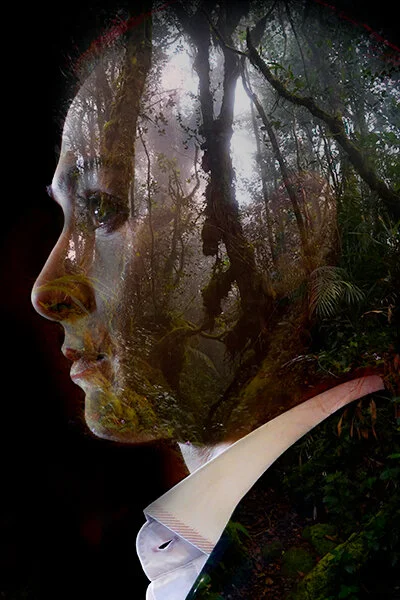
Multiple exposure is a photographic or video technique that involves exposing the same frame two or more times. This process is known as a double exposure or a multiple exposure of the film.
This technique emerged alongside film cameras from brands such as Nikon, Sony, Canon, Fuji and Leica. Artists would take one photograph and then another without advancing the film. Whether it was a simple accident, a happy coincidence or a result of perfect mastery of their equipment, it is not clear exactly how double exposure came about.
This process was brought to the fore in the 1920s and 1930s by photographers associated with the Surrealist movement. It is a technique used in the service of art that reveals the unusual aspects of nature and the urban landscape. Reflections in shop windows, which also function as layers of visual composition within the city, attract artists who view the effect as a form of natural superimposition.
Through double exposure, photographers break free from the conventions and image templates that are found everywhere. It’s an interesting blend of technique and artistry on the one hand, and an element of chance on the other.
We must dare to be different and offer a different perspective, even in the context of corporate photography or event photography. It’s a great way to showcase your creativity and highlight the beauty of the world through poetic images.
It is clear that the technique has adapted to new technologies. Nevertheless, despite advances in professional photographic equipment, double exposure has never ceased to fascinate image-makers. In the digital era, double exposure is often achieved in post-production using software such as Lightroom, Photoshop, Adobe Premiere, Final Cut or other photo-retouching and video-editing programmes.
Technique:
To create a double exposure photograph, underexpose each individual shot that makes up the final image. In practice, if you take two shots, halve the exposure for each shot by using a faster shutter speed, a lower ISO setting or a smaller aperture.
When there is an odd number of photos, you can proceed by trial and error; the final result is corrected during post-production.
The physical principle behind double exposure is straightforward: highlights take precedence over shadows. An image with highlights will stand out against an image with shadows. When the contrast is strong, this is fairly easy to visualise before taking the shot. When the contrast is less pronounced, the ‘mix’ becomes more subtle. With more than three exposures, the result can be unexpected, both in terms of lighting and graphic composition.
It is therefore easier to create overlays in dark or dimly lit areas than in bright light.
Our tips and tricks:
Seek simplicity
To ensure the final image is clear, it is best if the individual photos used to create it do not contain too many colours and shapes that might overwhelm the viewer. Generally speaking, using too many photos can make the result look cluttered. ‘Keep it simple’ is therefore the best approach to take.
Play with light and shadow
Shadows in an image can be created using the texture or colour of another image.
Please feel free to change the orientation of the images.
To ensure that two images align perfectly and produce a poetic effect, adjust their orientation: place one vertically and the other horizontally.
Our approach: rigorous testing
Multiple exposure is a technique in which chance can be a key factor in success. Experimenting, trying out different methods of composition, playing with contrasts, orientation and colours are all essential to achieving the perfect image.
Our favourite is, of course, Florian Imgrund, a German photographer who creates stunning, poetic images. He has perfectly mastered the art of double exposure and succeeds in creating an almost fragile black-and-white world – a blend of portraiture and nature.
Please feel free to view Florian Imgrund’s Flickr account.
It’s up to you to give it a go and let your creativity run wild!