Tiny planets: high-quality images for creative and effective communication
Tiny planet photography for creative and effective corporate communications. Request a quote.
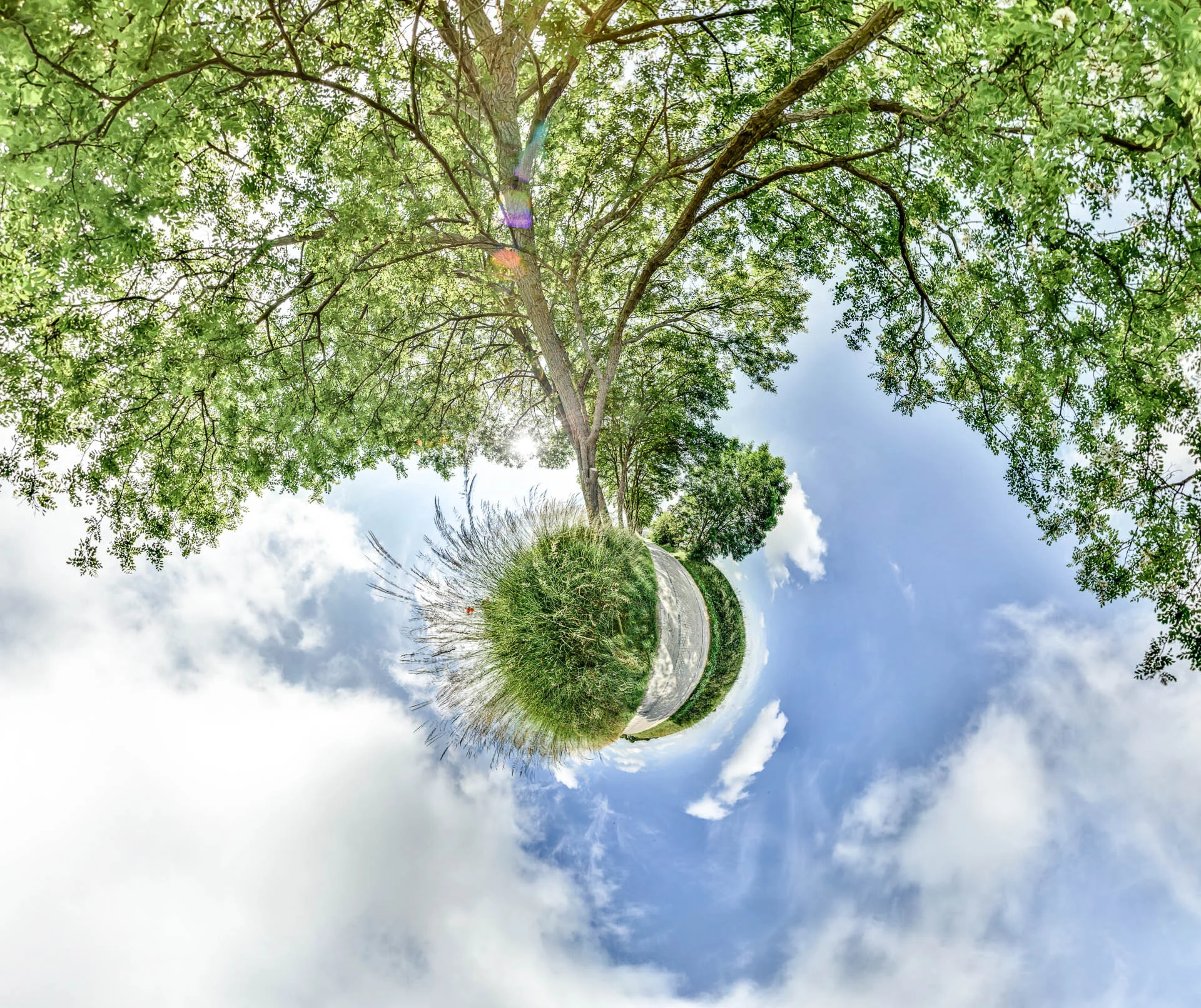
A ‘tiny planet’ is a 360° panoramic photograph that has been stitched together and processed to create a spherical image.
This intriguing and sometimes surprising effect is achieved by taking a series of photographs, which are then stitched together using image-editing software such as Photoshop or specialist stitching programmes such as Autopano and PTGui.
These photographs present an original vision that captures fresh perspectives on landscapes, nature and urban spaces. They are well suited to ethical and environmentally responsible marketing plans and communication campaigns.
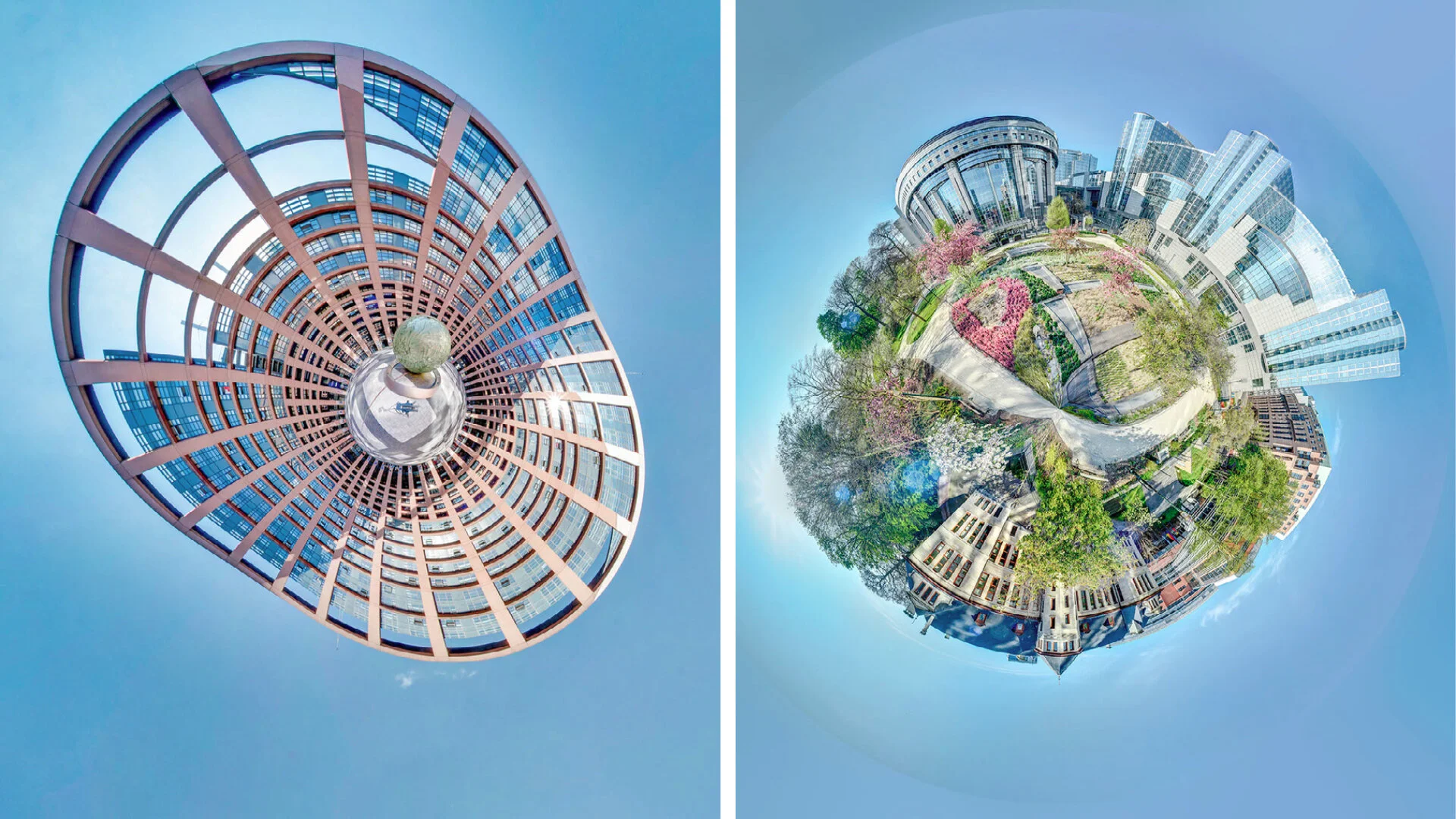
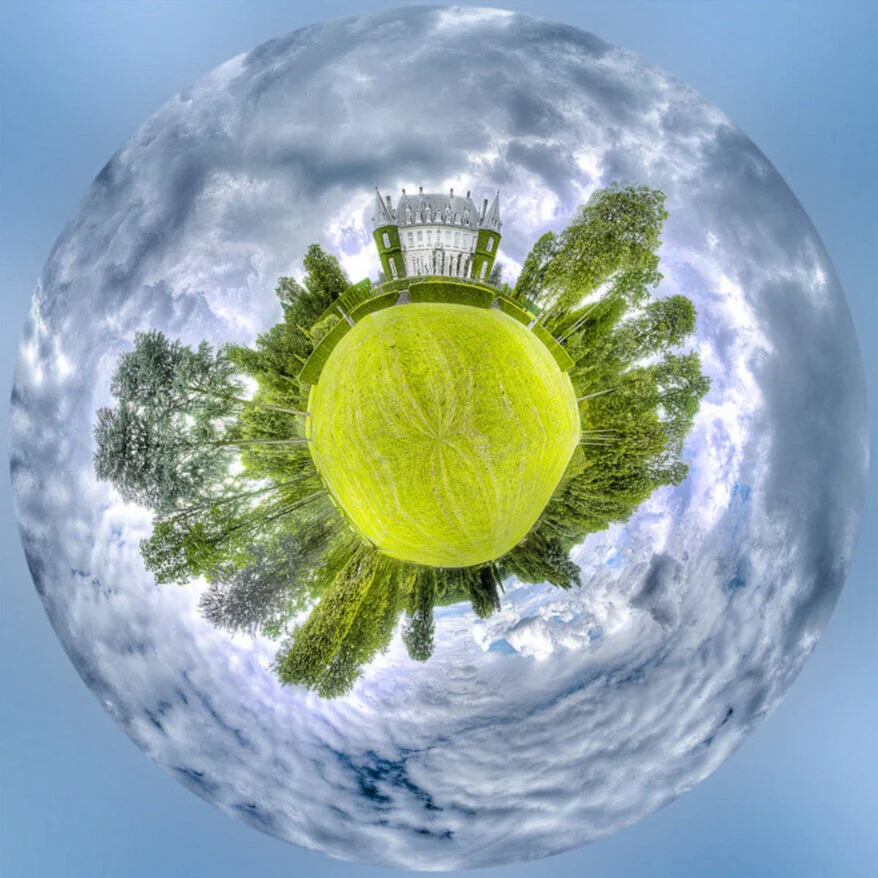
Tiny planet images and photographs are highly evocative and bear a slight resemblance to the planet in *The Little Prince*. To ensure the final result matches our imagination, they demand a high level of skill from the photographer.
The effect is striking and unusual, sitting somewhere between drawing, painting, computer-generated imagery and photography.
A brief history of 360° photography
The first panoramic camera (an Austrian cylindrograph) is thought to have been invented in 1841.
As early as 1845, Frédéric Martens, or Friedrich von Martens, an Italian engraver and photographer, developed a camera with a wide field of view for taking panoramic photographs. He thus produced daguerreotypes of the River Seine in Paris.
The best-known cameras capable of producing panoramic images are: the Linhof Technorama 612, the Horseman 612 and 617, the Silvestri, the Plaubel, the Widelux and the Noblex.
With the advent of the 35 mm film format and advances in technology, a range of new cameras came onto the market: Noblex, FT, Hasselblad X Pan 1 and Fuji G 617.
How do you create a tiny planet photo?
Step 1: Creating a panoramic image
A ‘tiny planet’ begins as a panoramic photograph.
Two ways to achieve the ideal result:
-
By cropping: simply crop the image in post-production.
This solution is straightforward and well suited for sharing the image on social media platforms such as Facebook, LinkedIn, Twitter or Instagram. -
By stitching: take a series of photos that overlap by around 30 per cent, then stitch them together in post-production using stitching software to create a panorama with no visible seams.
This solution delivers the best results and excellent image quality.
Our handy tips:
-
A vertical composition allows for greater height and higher resolution in the final photograph.
-
Photographs can be captured handheld for landscapes, but image quality improves significantly when professional equipment is used, such as a tripod, a manual panoramic head (Nodal Ninja, distributed by Fanotec., Manfrotto or Novoflex), or, for professional photographers, a motorised head (Seitz Roundshot, Clauss Rodeon, Nodal Ninja or Manfrotto).
-
To achieve a perfect image, rotate the camera and lens around a central point: the ‘nodal point’ or ‘entrance pupil’. This alignment ensures that each image in the panorama can be stitched together with great precision.
Step 2: Converting a panoramic image into a tiny planet
We provide two methods for generating and creating a tiny planet.
Using Photoshop
This is the method used by most photographers:
-
Open the 360° x 180° panorama.
-
Turn this panoramic photo into a distorted square using the menus: Image / Image Size.
-
Next, rotate the image by 180° via the menus: Image menu / Rotate image / 180°.
-
Finally, select Photoshop’s Polar Coordinates filter from the menu: Filter > Distort > Polar Coordinates, and choose the ‘Rectangular to Polar’ option.
-
It is often necessary to rotate it a further 180° (point 3 above).
-
Final touches to create the perfect image.
Through assembly programmes
PTGui, (Autopano) or the free software Hugin, which allows you to choose between a spherical or Tiny planet projection when editing a panoramic photo.
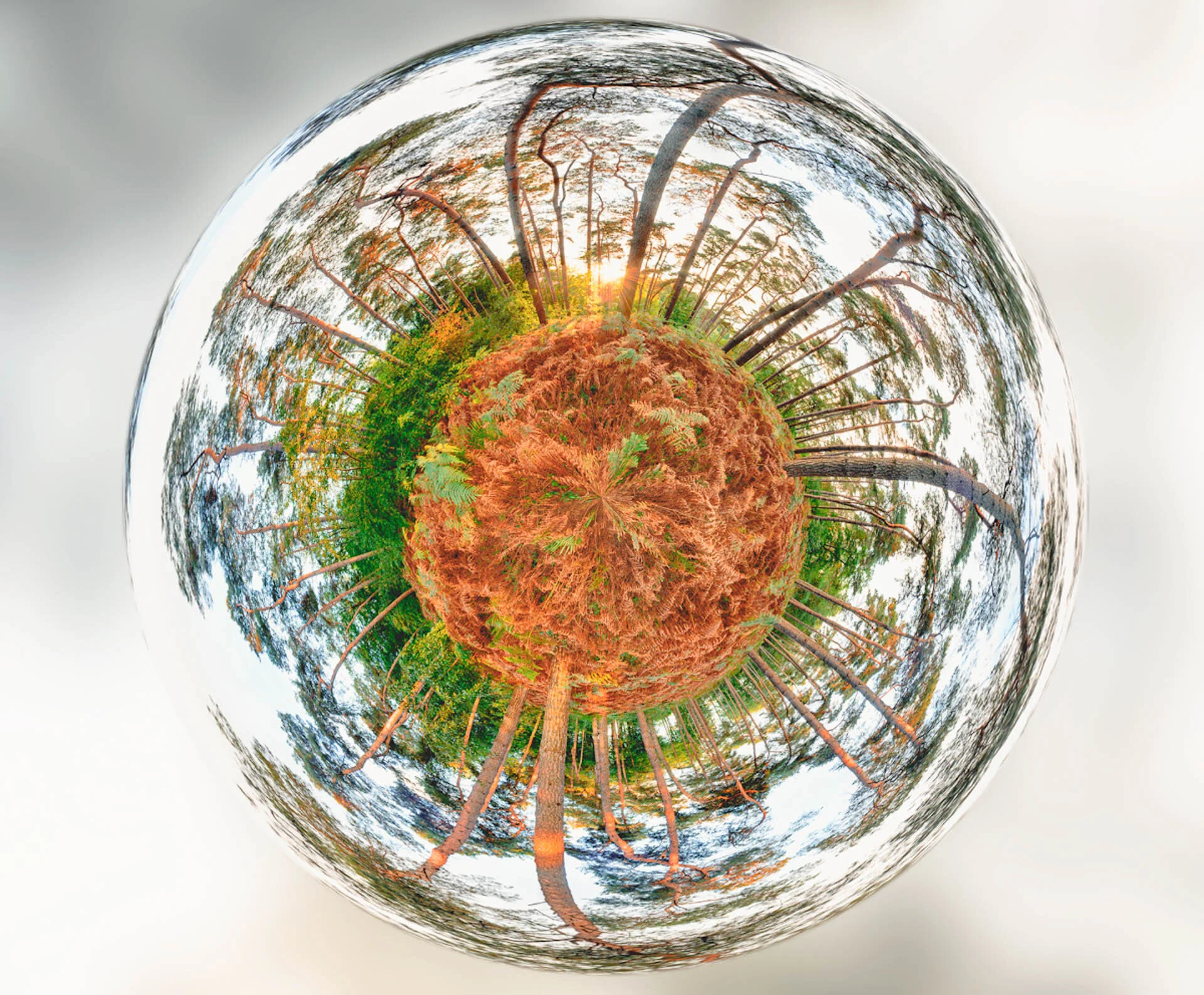
Imagination knows no bounds, and neither does creativity.
Consider creating ‘tiny planet’ images using HDR (High Dynamic Range) or gigapixel photography.
Tiny planet photos are striking images: while the technique must be mastered to a high standard, there is always a small element of chance involved. The final result is never known from the outset, and that is often why the magic of discovery comes into play.
Work with our professional photographers in Wallonia, Brussels, throughout Belgium and France, and gain a distinctive perspective for your communications, projects and events with our tiny planet images and photos.
Art prints by Paul Marnef: explore the Imaginary Planets at paulmarnef360.com.
Belgian photographer Paul Marnef presents a unique and poetic vision of our world through his ‘Imaginary Planets’ series.
His works are available as limited-edition art prints. Each piece begins with an original photograph that has been meticulously reworked, blending contemporary photography, naturalist inspiration and visual imagination. His website, paulmarnef360.com, presents these works and offers them in various formats, from affordable options to large-format and relief prints. Each ‘tiny planet’ is conceived as a standalone artwork that invites contemplation, daydreaming and reflection on our environment. Art lovers, collectors and photography enthusiasts will find striking works here, carefully printed in Fine Art, Chromaluxe or Alu Dibond finishes, to enhance any interior space.